Wondering if Vancouver, WA could be the right place to buy your first investment property? You are not alone. Many first-time investors are drawn to Vancouver because it offers a meaningful renter base, a diverse local economy, and a range of property types that can fit different budgets and goals. If you want a practical, low-hype look at how to get started, what to watch for, and how to think through your numbers, this guide will help you take the next step with more confidence. Let’s dive in.
Why Vancouver draws first-time investors
Vancouver is not a tiny niche market. The city’s estimated population reached 198,992 in 2024, and Clark County was estimated at 542,400 in 2025. That kind of scale matters because it supports ongoing housing demand across different price points and property types.
The renter base is also significant. Vancouver’s owner-occupied housing rate was 50.8%, which implies that roughly half of occupied homes are renter-occupied. For a first-time investor, that means you are looking at a market where renting is a normal and meaningful part of the housing landscape.
Local income figures add more context. Vancouver’s median household income was $81,338, while Clark County’s median household income was reported at $97,678. Those numbers do not guarantee rental performance, but they do suggest a broad base of households supporting a range of housing choices.
What supports rental demand in Vancouver
A strong investment market usually needs more than one demand driver. Vancouver benefits from being part of the Portland-Vancouver-Hillsboro metro, where employment is spread across trade, transportation, and utilities, manufacturing, education and health services, professional and business services, and government.
That diversity matters because it can reduce dependence on any single employer or industry. In simple terms, rental demand is tied to a broad job base and everyday household formation, not just one hot trend.
The Port of Vancouver USA also plays a practical role in the regional economy. It sits at the intersection of ocean and river shipping lanes, two interstate highways, and a rail network, and it moves more than 7 million tons of cargo annually while hosting 50 industrial tenant businesses. For investors, that helps explain why the local housing market has ongoing links to logistics, industry, and regional employment.
Best first property types to consider
If you are buying your first investment property, simpler is often better. In the Vancouver area, the most common starting points are usually:
- Single-family homes
- Townhomes
- Condos
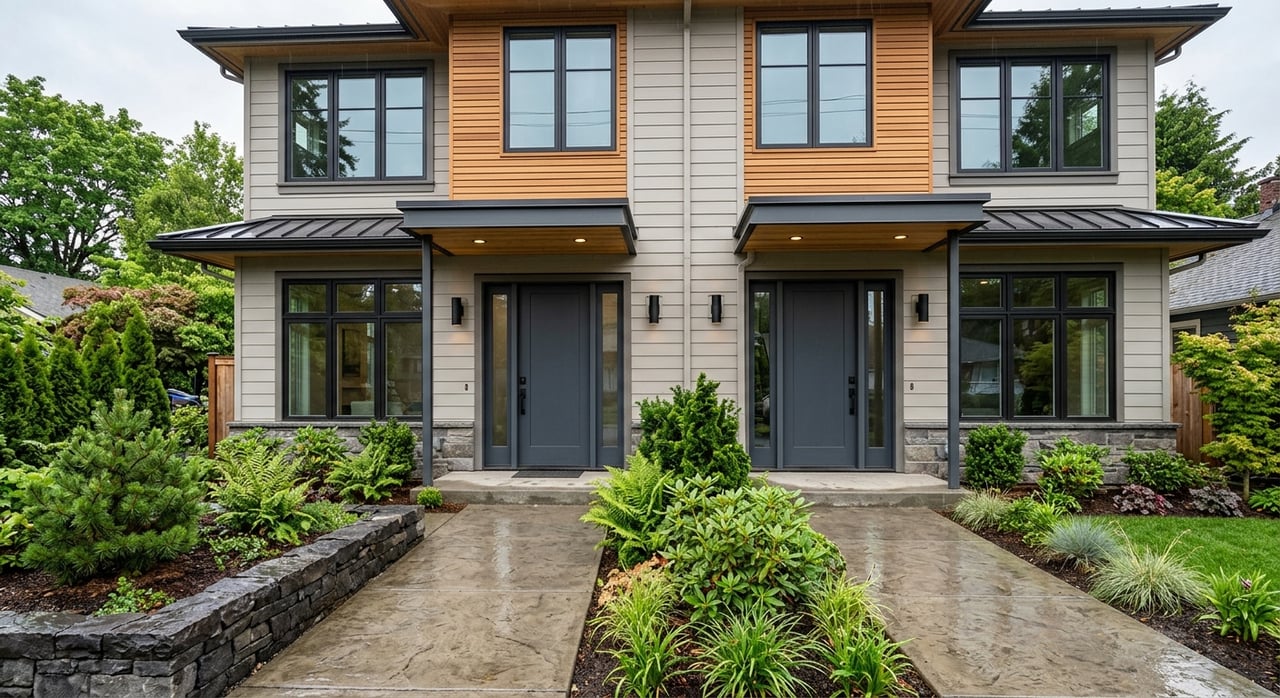
- Duplexes
- Small multifamily properties
Clark County’s housing studies show that the unincorporated Vancouver urban growth area has long been dominated by single-family detached housing, with 76% of the housing stock in that category. At the same time, county planning supports a wider mix of housing types such as duplexes, triplexes, quadplexes, condominiums, and multifamily apartments.
That creates a useful middle ground for first-time investors. You can still focus on familiar property types like single-family homes or condos while keeping an eye on small multifamily options if the numbers make sense.
Single-family homes
Single-family homes often appeal to first-time investors because they are easy to understand and usually easier to resell later. They may also attract longer-term tenants, depending on the property and location.
The tradeoff is that all maintenance costs fall on one unit. If the home is vacant, your rental income drops to zero while your expenses keep going.
Condos and townhomes
Condos and townhomes can offer a lower entry point than detached homes in some cases. They may also have less exterior maintenance, which can simplify ownership.
The key issue is to account for HOA dues in your monthly math. A property that looks affordable at first glance can feel very different once dues, insurance, and reserves are included.
Duplexes and small multifamily
A duplex or small multifamily property can give you more than one income stream from a single purchase. That can help reduce the effect of one vacant unit.
Still, small multifamily often brings more moving parts. Repairs, tenant coordination, and turnover can become more demanding, so it is smart to be realistic about the time and systems required.
Why ADU potential matters
If you are thinking long term, accessory dwelling unit potential may be worth exploring. Clark County allows urban ADUs in many single-family and multifamily residential districts, and the county says up to two ADUs may be allowed on a lot with one single-family residence, subject to zoning and permit rules.
That does not mean every property is a good ADU candidate. You still need to check lot conditions, utilities, size standards, and occupancy approval requirements.
For a first investor, though, ADU potential can be attractive because it points to a slower, more conservative value-add path. Instead of chasing a major repositioning project, you may be able to buy a property with future flexibility and hold it over time.
How to underwrite your first deal
The biggest mistake new investors make is focusing on rent and forgetting the full cost of ownership. A property only works if the numbers still make sense after you include the real operating picture.
Think about cash flow as money coming in versus money going out. That means your estimate should include:
- Principal and interest
- Property taxes
- Insurance
- HOA dues, if any
- Repairs and maintenance
- Vacancy
- Property management, if used
- Reserves for larger future expenses
This is where discipline matters. It is safer to underwrite using realistic assumptions instead of the highest possible rent number or the most optimistic repair budget.
Don’t overlook Clark County property taxes
Property taxes deserve special attention when you are buying in Vancouver or nearby Clark County areas. The Clark County Treasurer states that real property taxes are due in two installments, with the first half or full amount due by April 30 and the second half due by October 31.
Tax bills also vary by taxing district. That means two similar homes can carry different tax costs depending on the parcel’s location.
For you, the lesson is simple: treat property taxes like a monthly expense. If you do not reserve for them throughout the year, they can become an unpleasant surprise.
Financing your first investment property
Before you make an offer, compare lender options carefully. A lower rate matters, but so do closing costs, cash needed at closing, and your total monthly payment.
When you review loan options, pay close attention to:
- Monthly principal and interest
- Escrowed taxes and insurance
- Closing costs
- Cash required at closing
A solid financing plan should support your investment strategy, not strain it. If the deal only works under perfect conditions, it may not be the right first purchase.
Washington rules that affect rental math
If you plan to hold a property as a long-term rental, Washington rules need to be part of your analysis from day one. The state Attorney General says the rent stabilization law generally limits annual rent increases to the lesser of 10% or 7% plus CPI over any 12-month period, requires 90 days’ written notice, and prohibits rent increases during the first 12 months of a tenancy.
The Attorney General also states that the maximum annual increase allowed for 2026 is 9.683%. For first-time investors, that means it is wise to assume rent growth may be slower and more regulated than expected.
Move-in money rules matter too. For leases or rental agreements entered into on or after May 7, 2025, Washington law says move-in fees and security deposits combined generally may not exceed one month’s rent, or two months if the tenant brings pets into the tenancy.
The law also requires the landlord to place the deposit in a Washington trust account and provide written receipt and depository information. Even a straightforward rental can involve detailed compliance, so organized systems matter.
A smart first strategy: keep it conservative
For most first-time investors in Vancouver, a conservative buy-and-hold approach is the most practical place to start. That usually means choosing a property with steady tenant demand, manageable maintenance needs, and enough room in the budget to handle vacancies, repairs, taxes, insurance, and reserves.
It also means being careful about relying on rapid rent growth or speculative appreciation. A property should be able to hold up even if conditions are less than ideal for a while.
In many cases, the strongest first investment is not the most exciting one. It is the property that is easier to maintain, easier to rent, and easier to understand.
How to build your local team
You do not need to figure this out alone. Before you buy, it helps to talk with the right professionals so your financing, tax planning, and rental operations are aligned with your goals.
Your support team may include:
- A lender who can explain your financing options
- A tax professional who can help you understand ownership and tax planning
- A property manager if you want help with day-to-day operations
- A local real estate agent who can help you evaluate neighborhoods, property types, and resale considerations
This step is especially important if you are buying from out of town or comparing Vancouver with nearby Oregon markets. Clear guidance can save you time and help you avoid expensive assumptions.
What first-time investors should focus on most
If you are just getting started with investment property in Vancouver, WA, keep your attention on the basics. Look for stable demand, understandable property condition, realistic monthly numbers, and a strategy you can actually manage.
You do not need a flashy deal to make a smart first move. You need a property that fits your budget, matches your risk tolerance, and gives you a workable path forward.
If you want help evaluating Vancouver investment opportunities with a practical, step-by-step approach, Susan Lee can help you compare options and move forward with clarity.
FAQs
What makes Vancouver, WA appealing for a first investment property?
- Vancouver has a meaningful renter base, a growing population, and a diversified regional economy, which can support steady long-term rental demand.
What property types are common for first-time investors in Vancouver, WA?
- Common entry points include single-family homes, townhomes, condos, duplexes, and small multifamily properties.
How should you estimate cash flow on a Vancouver rental property?
- You should subtract all major expenses from rent, including mortgage costs, property taxes, insurance, HOA dues, repairs, vacancy, management, and reserves.
What should Vancouver investors know about Clark County property taxes?
- Clark County property taxes are due by April 30 for the first half or full payment and by October 31 for the second half, and tax amounts can vary by taxing district.
How do Washington rent increase rules affect Vancouver investors?
- Washington’s rent stabilization rules generally limit annual rent increases, require notice, and restrict increases during the first 12 months of a tenancy, so long-term projections should stay conservative.
Can an ADU add value to an investment property near Vancouver, WA?
- In some cases, yes. Clark County allows urban ADUs in many residential districts, but each property must meet zoning, permit, utility, and size requirements.