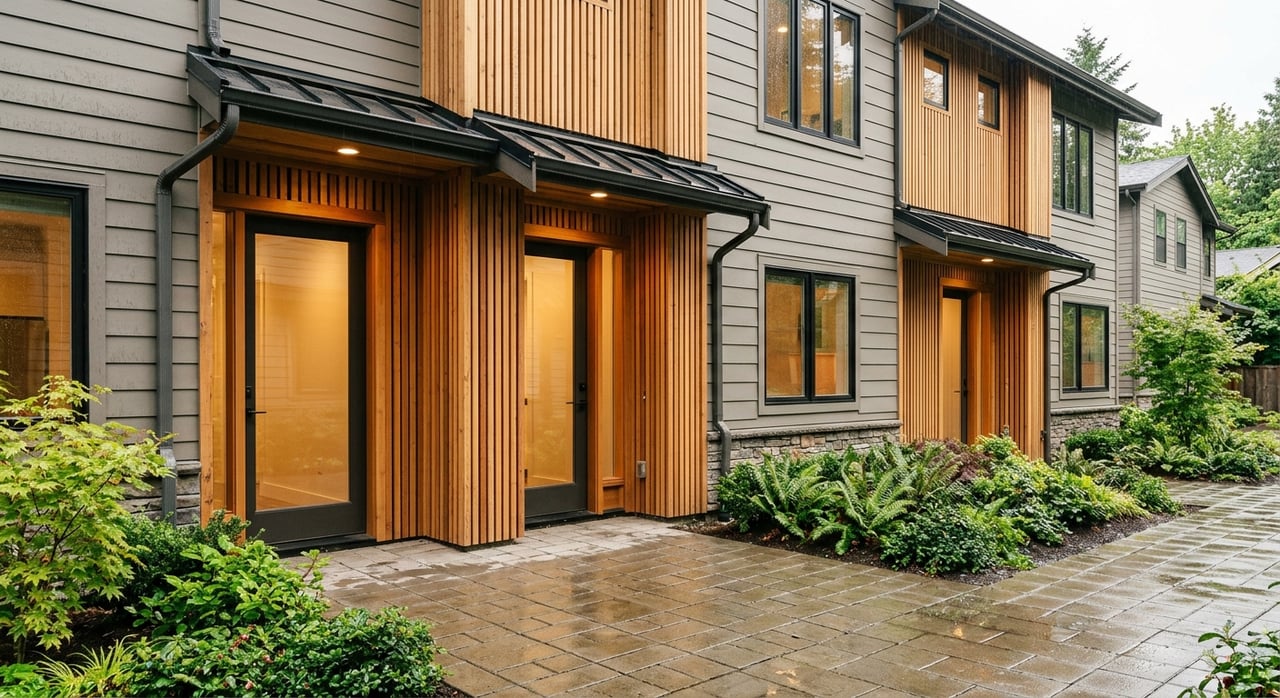
Wondering whether a condo or townhome in Beaverton is the better fit for your budget, lifestyle, and long-term plans? You are not alone. Many buyers see attached homes as a smart way to get into the market or simplify maintenance, but the details can vary more than most people expect. This guide will help you understand how condo and townhome living works in Beaverton, what to compare before you buy, and how to spot the tradeoffs that matter most. Let’s dive in.
Condo vs townhome in Beaverton
In Beaverton, the words condo and townhome do not always tell you everything you need to know. Under Oregon rules, townhouse is often a design description rather than a separate legal ownership type. What matters most is how the property is legally structured and what the governing documents say.
A condominium is governed under Oregon law as a form of ownership where you own your unit and share ownership of common elements through the association. Those common expenses can include administration, maintenance, repair, and replacement of shared areas. In many cases, that means the association handles more of the exterior and shared property responsibilities.
A townhome may look and feel more like a house, often with multiple levels, an attached garage, and private outdoor space. But a townhome can still be part of a condo structure or an HOA-governed planned community. That is why it is so important to confirm who is responsible for the roof, siding, landscaping, roads, and common areas before you fall in love with a place.
Why legal structure matters
Two homes can look similar from the street and come with very different ownership responsibilities. One may have an association that covers major exterior items, while another may leave more maintenance to you as the owner. The monthly dues may reflect that difference, but not always in a simple way.
In Oregon, condo associations and planned community HOAs can both collect dues for maintenance, insurance, operations, and reserves when those items fall under their responsibility. State law also requires reserve planning and maintenance planning for association-managed property. For you as a buyer, that means the budget and reserve study are not side documents. They are central to understanding risk and future costs.
Before buying, ask to review the declaration, bylaws, CC&Rs, reserve study, and current budget. You will also want to check for any upcoming or recent special assessments. A lower purchase price can lose some of its appeal quickly if a large exterior project is around the corner.
What condos in Beaverton often look like
Current Beaverton condo listings show a wide range of sizes, but many are compact and efficient. One-bedroom units are showing around 576 to 715 square feet, while two-bedroom options are often about 840 to 1,149 square feet. Some three-bedroom condos are also on the market around 975 square feet.
Features vary by community, but common examples include patios, balconies, carports, garages, and elevator access. If your goal is lower-maintenance living, a condo can be appealing because shared exterior upkeep is often handled by the association. That setup can be especially helpful if you want a simpler routine or a home base with less day-to-day exterior work.
Condos can also open the door to Beaverton homeownership at a lower price point. Citywide market snapshots show condos for sale at a median listing price of about $299,000. For many first-time buyers, that price gap can make a real difference.
What townhomes in Beaverton often offer
Townhomes in Beaverton commonly offer more interior space and a more house-like layout. Current listings often show two to three bedrooms, two to four baths, and roughly 1,000 to 1,700 square feet. Attached garages, end-unit privacy, fenced or private outdoor areas, and loft or office flex space also show up often.
If you want separation between living and sleeping areas, room for guests, or a work-from-home setup, a townhome may check more boxes. The design often gives you a bit more breathing room than a typical condo, while still offering a more manageable footprint than a detached house.
That extra space usually comes with a higher price. Current citywide snapshots show townhouses in Beaverton at a median listing price of about $424,000. That does not automatically make one better than the other. It simply means your budget should be weighed against the features and ownership structure you are getting.
HOA dues and maintenance tradeoffs
This is where many buyers need the clearest explanation. HOA dues in Beaverton can vary a lot, and the number alone does not tell the full story. Current examples in the market include monthly figures such as $297, $319, $440, $792, and even $1,226.
Some dues may include water, sewer, garbage, exterior maintenance, or amenities like pools, gyms, and clubhouses. Others may cover less than you assume. A higher monthly due may support a stronger reserve fund or broader maintenance coverage, while a lower due may leave more future cost exposure.
Special assessments matter too. One current townhome listing disclosed a $15,000 roof assessment. That does not mean every community has the same issue, but it is a strong reminder to look beyond the list price and monthly payment.
Questions to ask about HOA costs
- What does the monthly HOA fee cover?
- Who maintains the roof, siding, windows, decks, and fences?
- Is there a current reserve study and maintenance plan?
- Has the association approved or discussed special assessments?
- Are there recent major repairs or deferred maintenance issues?
- What rules apply to parking, pets, rentals, or exterior changes?
Where attached homes cluster in Beaverton
Attached housing is spread across Beaverton rather than limited to one pocket. The city’s neighborhood system includes areas such as Central Beaverton, Five Oaks / Triple Creek, South Beaverton, West Beaverton, and West Slope. These can be useful starting points when you think about commute patterns, daily errands, and the kind of setting you want.
Current market snapshots show condo and townhome inventory concentrated in several areas. Central Beaverton currently shows condo activity and a Walk Score of 73. Five Oaks shows both condos and townhomes with a Walk Score of 61, while South Beaverton and West Beaverton also show active attached-home inventory.
Listing patterns also suggest attached homes near downtown Beaverton and The Round, the Nike and Tualatin Hills corridor, Progress Ridge and Murrayhill, and the West Beaverton and Cedar Hills shopping and commuter corridors. That spread gives you options depending on whether you care most about transit access, shopping convenience, or a little more interior space.
Transit and lifestyle considerations
Beaverton can be especially appealing if you want more ways to get around. Beaverton Transit Center is a major TriMet hub served by MAX Blue, MAX Red, WES commuter rail, and multiple bus connections. MAX Blue connects Beaverton with Hillsboro, Portland City Center, East Portland, and Gresham, while WES serves Beaverton, Tigard, Tualatin, and Wilsonville during weekday rush periods.
The city also provides bike maps and bicycling safety information, which supports a lifestyle that mixes driving, transit, and biking. If you are looking at a condo or townhome near central Beaverton or west-side commuter corridors, that flexibility can add convenience to daily life.
At the city level, Beaverton is rated moderately walkable with a Walk Score of 52. That means location still matters a lot. A home near shopping, transit, or frequent commute routes may feel very different from one farther out, even if the homes themselves are similar on paper.
Budget and resale factors to compare
If you are comparing condos and townhomes, it helps to look at the full ownership picture rather than the sticker price alone. Neighborhood median prices vary widely. Current snapshots show Central Beaverton condos around $290,000, South Beaverton condos around $225,000, Five Oaks condos around $339,000, Five Oaks townhouses around $335,000, and West Beaverton townhouses around $379,000.
That range shows why local comparison matters. In some parts of Beaverton, the gap between a condo and townhome may be smaller than expected. In others, a condo may offer a much lower entry point.
For resale, practical features often matter just as much as square footage. Buyers tend to pay attention to:
- HOA health and reserve planning
- Monthly dues and assessment history
- Parking and garage availability
- Floor plan function
- Commute convenience
- Outdoor space
- Building or community upkeep
A well-located townhome with a garage may appeal to buyers who want a more house-like feel. A lower-priced condo near transit may appeal to buyers who prioritize affordability and convenience. The right choice depends on your goals, not just the category label.
How to choose the better fit
If you want the simplest path to lower-maintenance living, a condo may be worth a close look. You may give up some space, but you could gain a lower entry price and more shared exterior responsibility. That can be a strong match if you value convenience and predictability.
If you want more room, a garage, or a layout that feels closer to a single-family home, a townhome may be the better fit. Just make sure you understand whether the HOA still carries major control over exterior maintenance and future costs. The word townhome alone does not answer that.
A smart buying decision in Beaverton usually comes down to matching the documents, the dues, and the location to your daily life. When you review those pieces together, the choice becomes much clearer.
If you are weighing condo and townhome options in Beaverton, working with a local agent who can help you compare not just price, but structure, HOA obligations, and resale factors can save you time and stress. If you want steady guidance and a practical plan, connect with Susan Lee.
FAQs
What is the difference between a condo and a townhome in Beaverton?
- In Beaverton, a condo is a legal ownership structure under Oregon law, while a townhome is often a design style, so you should verify the actual ownership structure and HOA responsibilities for any home you consider.
Are HOA fees higher for condos or townhomes in Beaverton?
- HOA fees can vary widely for both, and the better question is what the dues cover, whether reserves are healthy, and whether special assessments may be coming.
Where can you find condos and townhomes in Beaverton?
- Current inventory is active in areas such as Central Beaverton, Five Oaks, South Beaverton, and West Beaverton, with attached housing also showing near downtown, west-side commuter corridors, and shopping areas.
Are Beaverton condos usually more affordable than townhomes?
- Current market snapshots show condos at a lower median listing price citywide than townhouses, but the actual value depends on location, HOA costs, layout, parking, and maintenance responsibilities.
What documents should you review before buying a Beaverton condo or townhome?
- You should review the declaration, bylaws, CC&Rs, reserve study, association budget, and any information about current or planned special assessments to understand your costs and responsibilities.